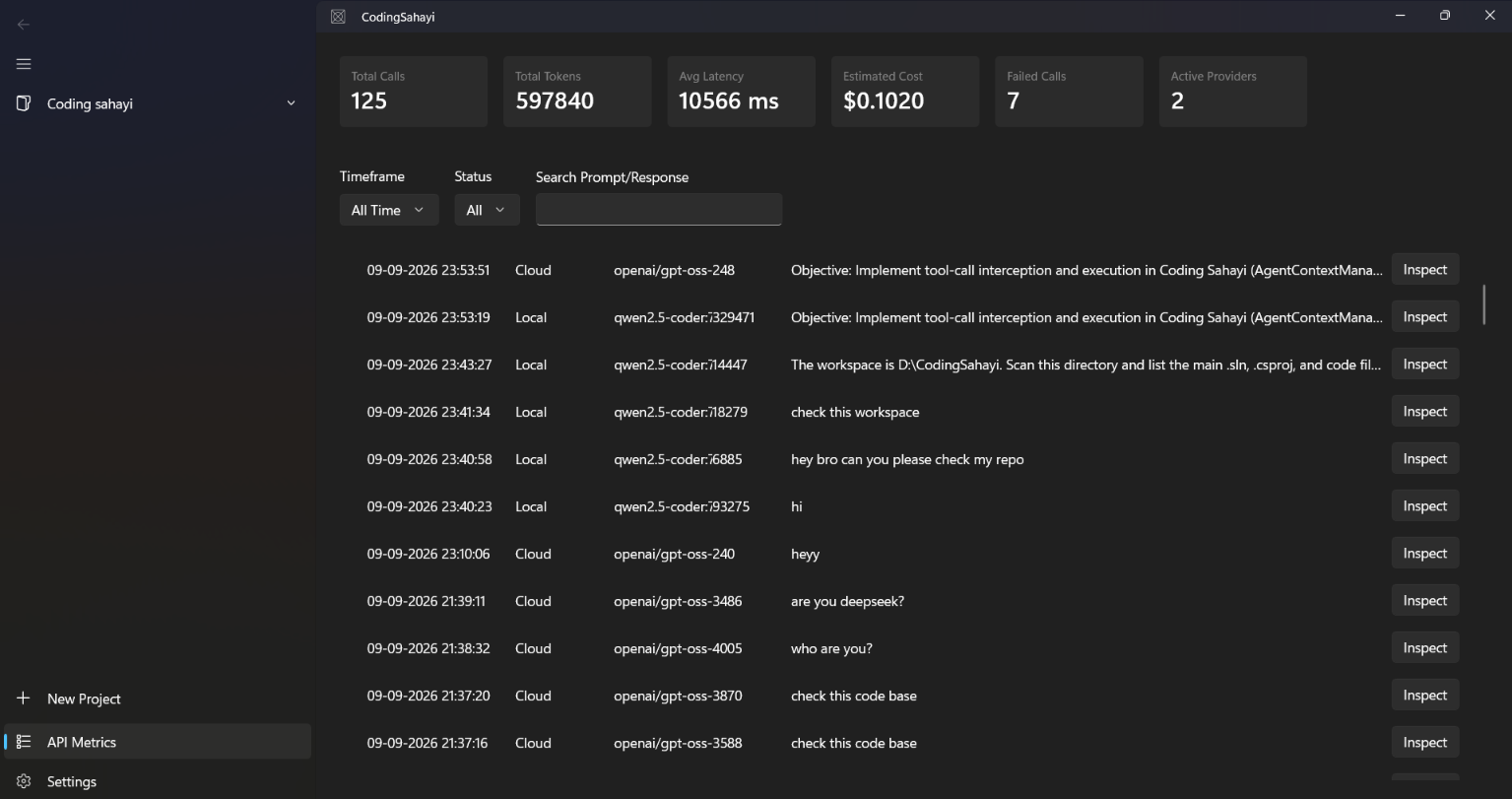
What is Coding Sahayi?
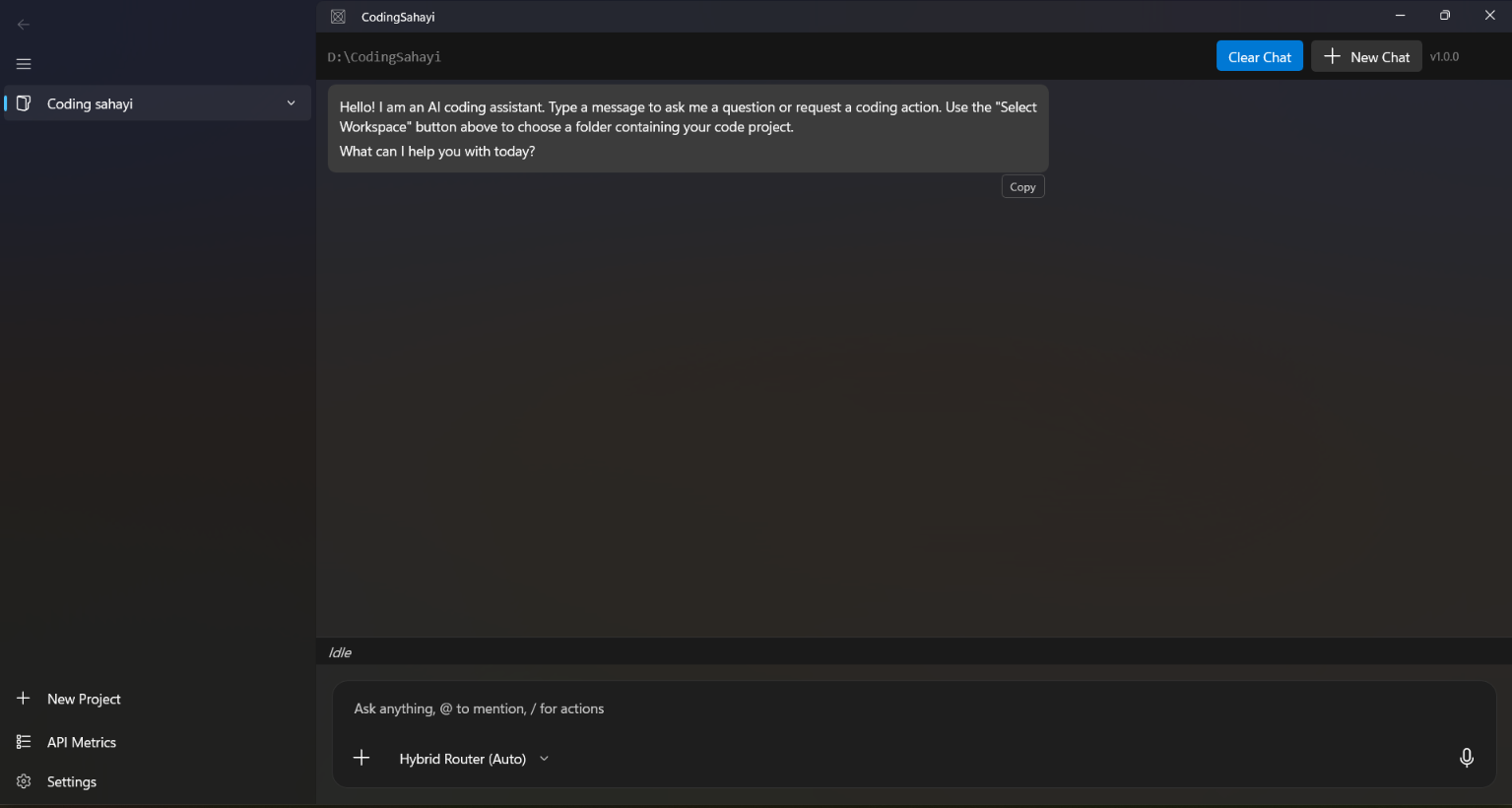
Coding Sahayi is a free, open-source, local-first autonomous coding IDE for Windows,
built with WinUI 3 and .NET 8. It runs specialized
agent swarms on your own machine, executes code through ConPTY
pseudo-terminals, detects and repairs its own failing tests, and continuously
fine-tunes a local model on the patches you approve.
Does Coding Sahayi send my source code to the cloud?
No. Coding Sahayi is designed local-first: inference runs through local providers
such as Ollama or LM Studio, repository memory is stored locally in EF Core and
SQLite, and fine-tuning happens on your own hardware. Your code and prompts stay
on your machine.
Does Coding Sahayi require an API key or a paid subscription?
No. Coding Sahayi is free and MIT licensed, and it does not require a cloud API key
or subscription. Because it uses local models, there are no per-token cloud charges.
You do need a Windows machine with enough VRAM for the model you choose.
What is an autonomous coding swarm?
An autonomous coding swarm is a set of specialized agents that each own a narrow
responsibility and cooperate on one task. Coding Sahayi uses four roles: an
Architect that plans and decomposes the work, a
Worker that writes the code, a Critic that
reviews and challenges the result, and a Scribe that records the
outcome. Narrow boundaries keep each agent's context small and its output verifiable.
How does the agent fix its own compiler and test failures?
Coding Sahayi runs builds and tests inside ConPTY pseudo-terminals and reads the
real exit codes and output. When a test or compilation fails, that output is fed
back to the swarm as evidence, which produces a targeted patch. The loop repeats
until the suite passes or a configured retry limit is reached, and every proposed
change is surfaced as a diff for review before it is applied.
Which local models and providers are supported?
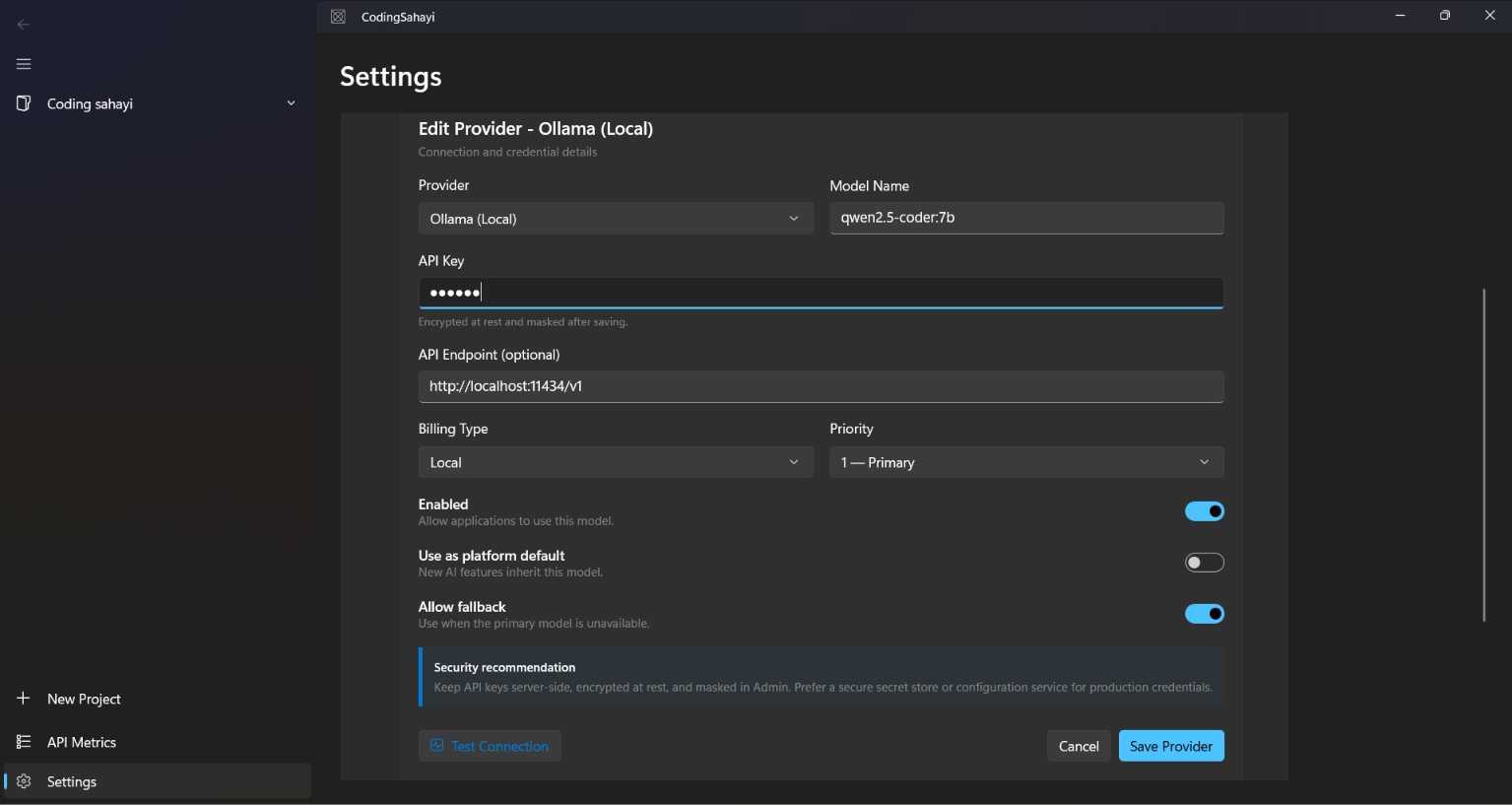
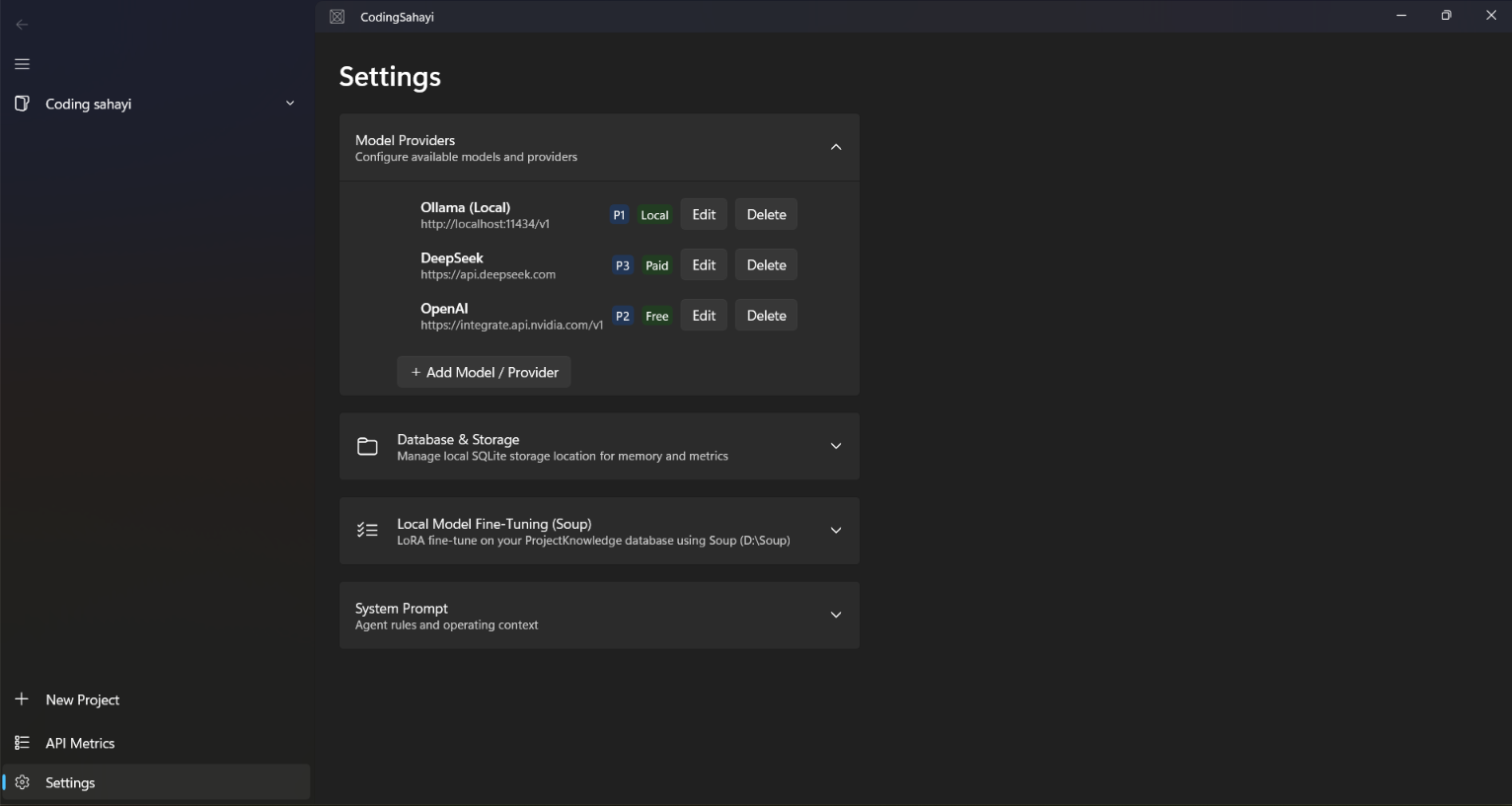
Coding Sahayi orchestrates local providers including Ollama and
LM Studio through a priority ladder, so you can rank which model
handles which task and fall back automatically when one is unavailable. Any model
exposed through those local endpoints can be used.
What is continuous fine-tuning in Coding Sahayi?
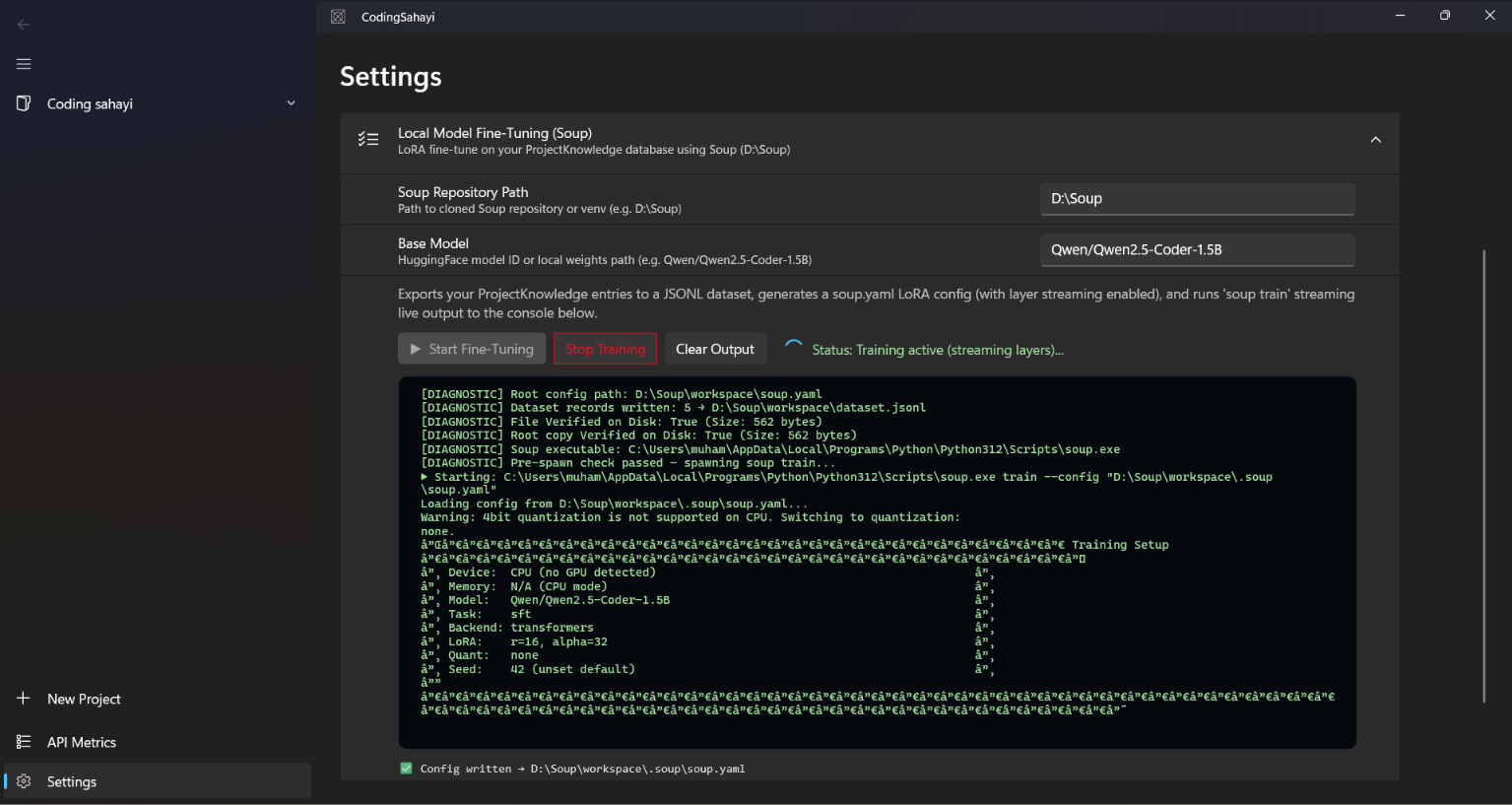
Continuous fine-tuning means the IDE exports the patches that were verified by a
passing test suite into a training dataset and adapts a local model on that data.
The model improves on patterns your own codebase has already proven correct, using
low-VRAM training suitable for real developer hardware.
What are the system requirements for Coding Sahayi?
Coding Sahayi requires Windows 10 or Windows 11 and the
.NET 8 runtime, since it is built with WinUI 3. A local model
provider such as Ollama or LM Studio must be installed, and your available VRAM
determines which model size you can run.